Showing posts with label spanish. Show all posts

Teaching Spanish Pragmatics & Spanish Dialectology, my two portfolio papers

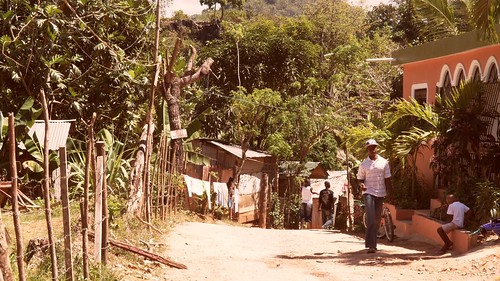
I have submitted my two portfolio papers to my committee, which means I'm a presentation and another paper away from graduating! They are both written in Spanish, but I will be translating at least the phonetic one very soon. The first is on teaching Spanish pragmatics, including a role play with a L1-L2 speakers, a comparison across the mundo hispano and a lesson plan. It is an expanded and revised version of the first paper I wrote at ASU. The second is on the evolution & variation of the liquid phonemes in the dialect of Jarabacoa, a mountain town in the Dominican Republic where I interviewed some locals last Spring Break. It includes statistical analyses with GOLDVARB, as well as a cross-Romance perspective and historical references. Here are the abstracts and links to view!


"La pragmática hispánica: estudios, variación y su enseñanza"
Lee (2000) sostiene que el objetivo del uso de la lengua es lograr una tarea más que simplemente practicar ciertas estructuras lingüísticas (p. 9). La transmisión de palabras entre las personas tiene una meta, así que pensamos en las palabras, formamos frases, y hablamos... ¿pero es tan fácil? Si la meta de aprender otras lenguas es comunicarnos, sería necesario conocer las maneras más apropiadas, aceptables y eficientes de interacción personal. Los estudios en la enseñanza de la pragmática de Olshtain y Cohen (1991), García (1996, 2002), Judd (1999), e Ishihara y Cohen (2010) enfatizan la importancia del conocimiento de las diferencias socioculturales. Entre similitudes sociopragmáticas y pragmalingüísticas, se destaca cada comunidad de habla. El mundo hispano es muy rico en historia y cultura, variando en sus diferencias sociales y variantes de lengua, por consiguiente, el desarrollo de la competencia sociolingüística vale mucho. Este trabajo incluye un breve resumen de la variación pragmática (California, Venezuela, Ecuador, España, Perú y Uruguay) que existe en el mundo hispano. Además, analiza algunos estudios y métodos de la enseñanza de la pragmática. Luego, compara el comportamiento de hablantes nativos y no nativos en la realización de hacer una solicitud. Al tomar estos datos en cuenta, se formará un currículo pragmático para estudiantes del español.


La evolución de las líquidas del Cibao
[ LINK TO VIEW ]
Las líquidas del español dominicano varían bastante en su realización. Por toda la isla, la pronunciación de las líquidas en posición de coda se correlacionan con diferentes jerarquías de estilo y de clase social (Alba, 1979). Esta variación se define por estigmatizaciones sociales (Lipski, 2009), estilísticos (Hualde, 2005) y de edad (Alba, 2003). Las normas de cada dialecto son distintas, especialmente en el Cibao, donde las poblaciones más rurales y aisladas hablan de manera muy diferenciada, como se demuestra por el título del estudio de Alba (1985): Los cibaeños hablan con la i. Los pueblos en el Cibao se distinguen de las demás regiones dialectales por la sobrevivencia de la vocalización. Entre la lateralización, la geminación, la aspiración, y la elisión, los cibaeños también eligen sustituir una vocal o semivocal por sus líquidas en ciertos contextos. Este fenómeno ya no se produce en el español de Cuba y Puerto Rico, pero existe solamente en algunas regiones rurales de Colombia, las Islas Canarias y Andalucía. Este estudio analiza el habla de tres hombres mayores, entre 60-70 años, para ver qué cambios siguen afectando a sus líquidas. Se tomarán en cuenta algunos de los primeros estudios importantes de la región del Cibao en los años 70 y 80, una época cuando dichos participantes tenían entre 20-30 años. Los datos serán analizados estadísticamente por el programa GOLDVARB. El análisis nos permitirá determinar qué realizaciones fonéticos prefieren los infinitivos, la conjunción porque, y todas las formas del articulo el. Se compararán los procesos fonéticos a algunos dialectos románicos del idioma sardo (el campinadese y el logudorese), algunos variantes que poseen realizaciones fonéticas muy parecidas a las cibaeñas. El estudio hará hincapié en estos procesos fonéticos y sociolingüísticos desde el punto de visto sincrónico y diacrónico para proveer un análisis holístico del comportamiento de las líquidas de la región.

Europe: languages & regional dialects

The linguistic situation in Europe is a tricky one, as regional languages and dialects cross national and cultural borders without regret. This map is great, giving priority to regional/indigenous languages as well as coloring by family. The Romance languages are green and quite diverse! 


The world of Romance Languages

Costa Rica

(my whole Costa Rica album is here on flickr)

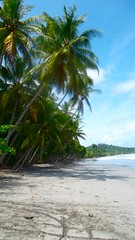
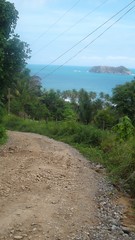
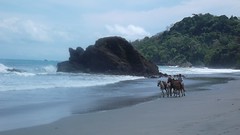
After crossing the border from Panama, my first stop in Tico land was in Manuel Antonio. It's well-known for its wildlife reserves & its beaches, and even though it was quite touristy, I really enjoyed myself. The beach was calling me the first day, so I walked about 5km down the hill from the hostel to the beach. Five hours & a few chapters from my philosophy anthology later, I called it a day & got my playa fix for the week.

playa :-)windin down to the sea
3 horse trotlovers

The hostel was super chill until about 9pm every night when the drunks got rowdy. It was fun watching the NBA finals & Gold Cup with them, but I really didn't feel like gettin hammered and meeting all these new people when I had a lot of transcribing to do. So, I was the guy with my laptop & headphones on in the corner, chuggin away at my work while the others chugged away at the cerveza.

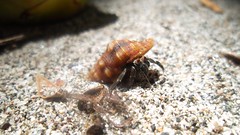
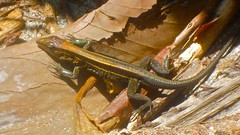
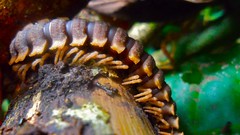
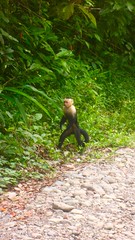
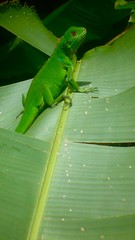
The Parque Nacional Manuel Antonio was next. I was amazed to see, without the $30 guides that so many paid for, so many animals in one day: sloths, monkeys, toucans, lizards, spiders & jungle crabs. Some of the pics of the sloths & toucans didn't turn out, but I did the best I could. It was incredible to watch the sloths. The first one was hanging on a branch of a tree that was overlapping its leaves into another tree. His arms were about 2 feet long, but he needed this leaf that was 2.5 feet away. He must have swiped his arm 30 times in that extra slow-motion grab before he realized it was not possible. The monkeys were swinging & dancing around him as if he wasn't there. It was so cool, I just don't know how these creatures have survived so long... I guess they just have no predators.... well, except for this one.

hermit begins his treka lizard hides
millipede
monkey on the prowlgreen lizard. the stare down.female (big), male (small). watch out, she's hungry!
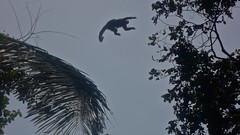
streeeeeetchin still, that slothflying monkey!

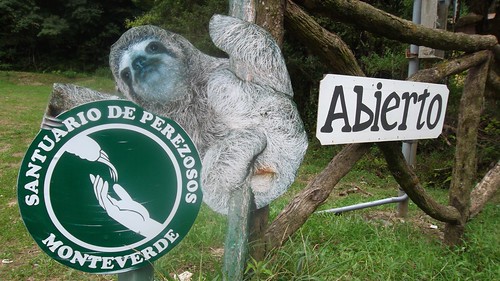
I left Manuel Antonio in search of more jungles & the highlands, ending up in Santa Elena (very close to Monteverde) in the NW region of Costa Rica. There it was also quite touristy, but I ended up meeting a bunch of cool med students from UCF, a Canadian who goes to UBC, a UW graduate living in Seattle, and a German named Phillip who ended up rooming with me, all of which were a super good time. My main goal, though, was to visit the sloth sanctuary (which contains the "slothpital"), but the owner had recently died & the sloths had been transported across the country, so this is as close as I got.

sloths & humans, unite!

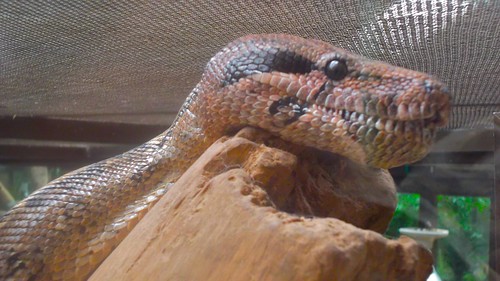
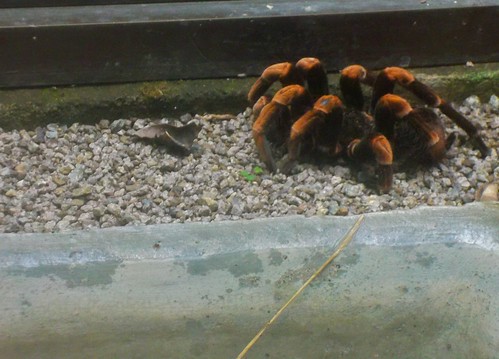
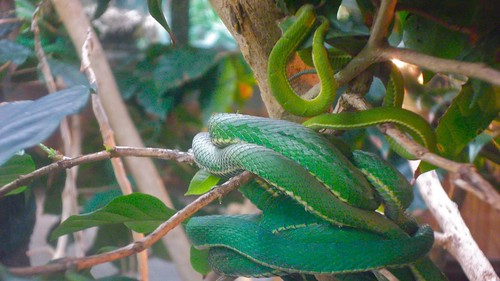
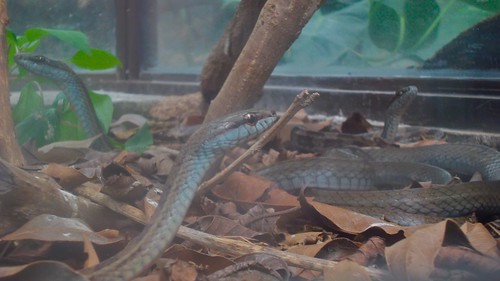
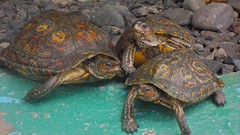
That was super frustrating after the 8km walk there, but I did stop at a reptile center on the way better, un "serpentario", with all kinds of snakes (which constantly gave me chills down my spine), frogs, lizards & turtles!

duhhhhh HELLotarantula
entanglementuno dos tres serpientes :-/
3 amigosslithery serpent

I splurged on my $20/day budget and used my credit card (which I'm not counting against the budget, hehehe) for a ziplining adventure... and let me tell you, it was worth it!!! There were 14 zip lines, ranging from 60m to 552m, a tarzan swing where you swin out and up a good 200 feet, and then a superman zipline at the end where you are strapped face forward and, well, fly like superman!!! The superman was probably the best 45 seconds & 1km of my life... it's really hard to describe with words how cool it is to see the jungle from that crazy aerial angle. The only lame thing is that I broke my camera trying to strap it to the front of my chest and record a video. It was crushed by the pressure of the guys who caught me on the Tarzan swing with this rubber pad. Here's the only real video that turned out decent, tho:


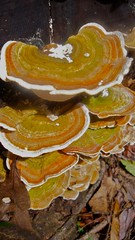
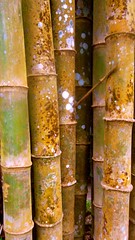
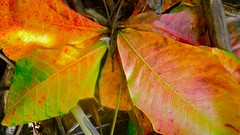
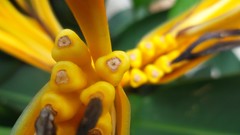
I had a lot of time just walking in Costa Rica. The flora & fauna were like I've never seen before, so I think just driving by everything would have left me slightly disappointed; walking let me take everything in at the right pace.

nature's sweet tater chipsbreast implant
layers & layersbamboozle
autumnbloom on the horizon!
nature's patternwater funnel


It was a little frustrating speaking Spanish there. I can't remember how many times I would speak in Spanish, they would respond in English, then I in Spanish, then them in English; it was as if we were battling to see who can practice there non-native language. I received many compliments on my Spanish from Ticos & Americans, but apparently that doesn't matter when someone is trying to sell you something or "help" you (the quotations on help represent those people who approach you and try to help you with your bags, tell you how to get somewhere when you already know how to get there, open the door for you and ask about your life in hopes of money for talking with them, etc...). I have noticed almost all of them have the American /r/ instead of the trilled Spanish /r/, not only when they say Costa Rica or Bira (instead of "cerveza"), but also on some syllable-final /r/, as in hacerla or largo.

OK, Nicaragua awaits... (!!!!!)

La evolución de las líquidas del Cibao

Based on my interviews in Jarabacoa this March, I compare the results of the 60-70 year old speakers to studies of their same population in the 70s and 80s. Their liquid consonants (/l/ [palo], the trill [perro], and the tap [para]) are much more neutralized due to the recycling of the same phonetic processes (i.e. lateralization [puerto-->pueL.ta], deletion [algo-->a.go], vocalization [mujer-->mu.jei], and also realizing the regular tap [ɾ] as either a trill, nothing, or even an [l] in a few cases [por ejemplo-->po.Le.jem.plo]); as these different variations' rankings change in social superiority, these experienced and assimilated speakers start to make generalizations of what is the norm.


Aquí está (en español):


Ryan Platz
Dr. Álvaro Cerrón-Palomino, Arizona State University
SPA 598 - Advanced Topics in Sociolinguistics, Spring 2011
"La evolución de las líquidas del Cibao"


1. Introducción
Las líquidas del español dominicano varían bastante en su realización. Por toda la isla, la pronunciación de las líquidas en posición de coda tiende a construir diferentes jerarquías de estilo y de clase social (Alba 1979). Esta variación se define por estigmatizaciones sociales (Lipski, 2009), por edad (Alba, 2003), y por estilo (Hualde, 2005), pero lo que se considera la norma es diferente en cada región. Esto no es más verdadero que en el Cibao, donde las poblaciones más rurales y aisladas de la capital hablan bien diferente que los demás, como el título del estudio de Alba (1985) demuestra: Los cibaeños hablan con la i.
Distinguen los pueblos en el Cibao de las demás regiones dialectales por la sobrevivencia de la vocalización. Entre la lateralización, la geminación, la aspiración, y la elisión, los cibaeños también eligen sustituir una vocal o semivocal por sus líquidas en ciertos contextos. Este fenómeno ya se ha muerto en el español de Cuba y Puerto Rico, existiendo solamente en algunas regiones rurales de Colombia, las Islas Canarias y Andalucía.
graffiti de varias partes

la república dominicana, el perú, spokane WA, puerto rico


make FULL SCREEN, [space] to pause/restart

the DR: bayahibe, isla catalina & las terrenas

(my pics so far are here)

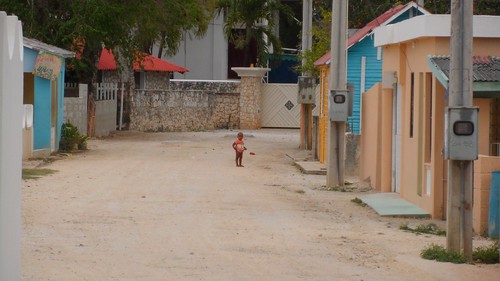
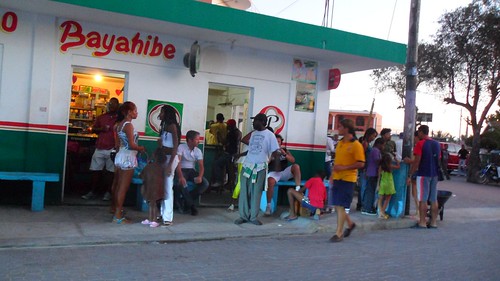
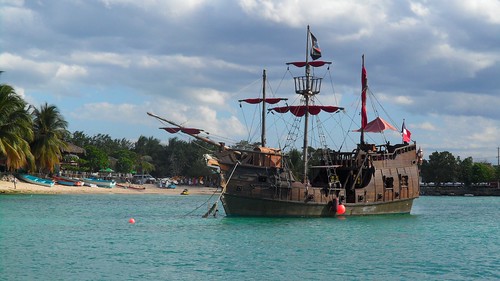
i landed in santo domingo, got the car, and got the hell outta there. i went to bayahibe in the SE corner of the island; i want to save the big city for last. bayahibe is really only a few streets that are really 'usable' for the foreigner, the rest being residential and spread out quite a bit. it's kind of isolated, not much more than a store, a few restaurants for tourists, an internet place, a pirate ship and then just a bunch of beaches... BEAUtiful beaches! the people were very welcoming, i felt their caribbean vibe right when i got there. my hotel was RD$700, about US$27... a little more than i wanted, but still, i was just happy to start my trip!

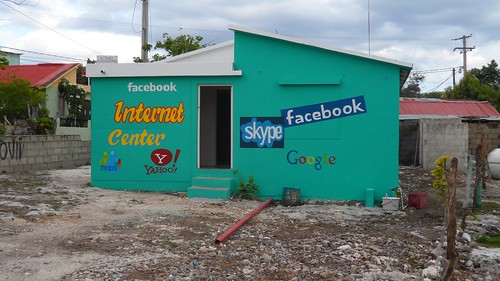
at your local internet hotspot! lolyo dude!
bar/store/restaurant/hang out spotahoy!

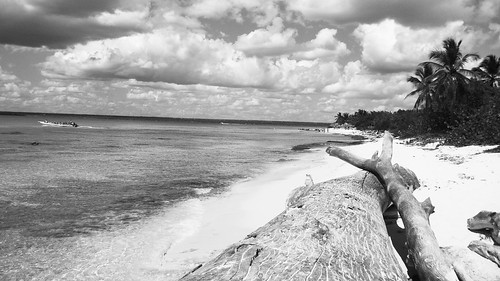
there were plenty of snorkling and scuba diving opportunities, so i signed up right away. my second day we went to isla catalina, an island without inhabitants about 40 minutes away from bayahibe by boat. on my boat there were some americans, french, russians, argentinians, dutch & haitians (which i thought were on bad terms with the dominicans, but apparently not so much here!). la isla catalina has that pristine white sand one always imagines in the caribbean, plus this emerald-turquoise-aquamarine-sea blue blend that kept me in awe the whole time i was on the beach. i saw a bunch of cool fish while snorkling; my fav was this little guy no bigger than your hand that was coal black with glowing electric blue spots... he almost looked radioactive! (wish i had an underwater camera...) they served us a great meal on the island (a rice blend, salad, grilled chicken & steak) and even gave us rum! it was funny to see another boat of tourists with life jackets on, all strapped in as we were getting our second rum & coke on the house!

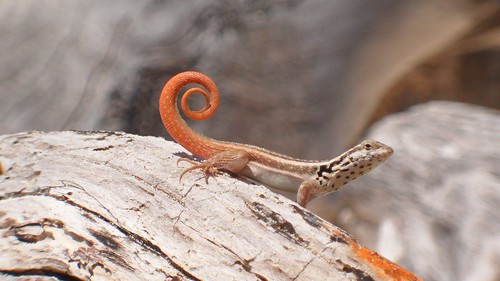
heat curled this lil lizard's tail right up!discoveries!
beautomous
parameter of the islebuez & greenz OH MY!

i also met this american family in which the girl (17ish, as white as can be, blue eyes, blonde hair, near albino) was volunteering at an orphanage in Port-au-Prince, Haiti. Her parents were visiting here and had taken the bus from there. i mentioned how sad it was to see all the poverty here in the DR, and they said it was nothing like what they saw in Haiti... like there were actual buildings in the capital!! Her dad said that he had visited Haiti years before, mentioning how it was like that place had been "hit my an earthquake". Well, he really ate his words on that one; i can only imagine how it is now.

the day after catalina i headed for las terrenas, a beautiful beachtown in the NW state of samaná... but not after i had to replace a flat tire that i woke up with in bayahibe. this guy about my age pointed it out to me as i was in the car leaving, then he started to help me take the tire off... a great example of the good vibes here. i went to la romana on the way, a much bigger city, and got a replacement tire & it changed for RD$100 (about US$2.60), the same price i paid for half a broiled chicken on the way out of town. twas crazy! and the road on the way to las terrenas was ridiculous, as in i couldn't go more than 25mph and there was a 2x4 foot whole every few meters... but i made it.
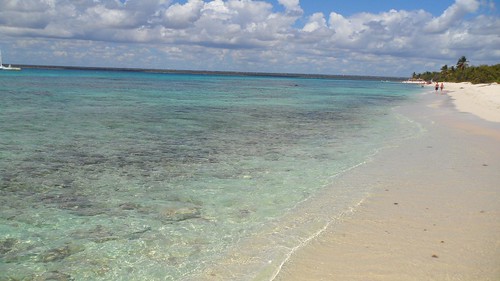
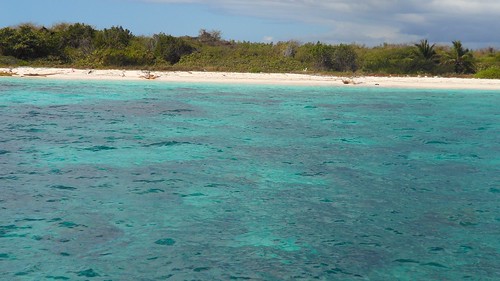
anyways, i have spent the last 2 days in las terrenas. there are more tourists here, mostly french, but it isn't really overwhelmed with them. it's a classic beach town: narrow streets, colorful buildings (lots of light colors), plenty of chill island music, etc...

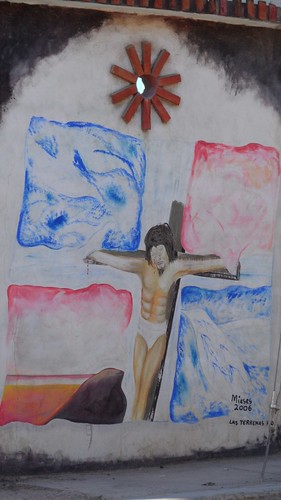
jesus cristo a la dominicanatri-color
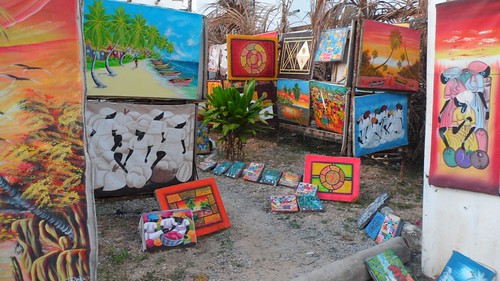
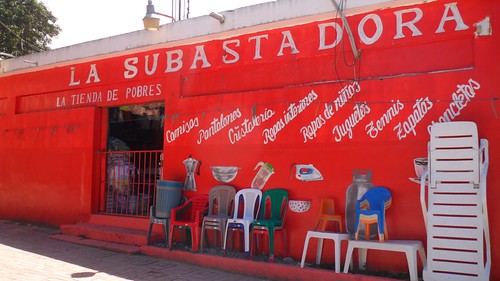
art galleryla subastadora: la tienda de pobres
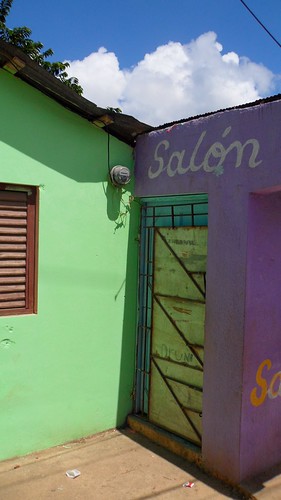
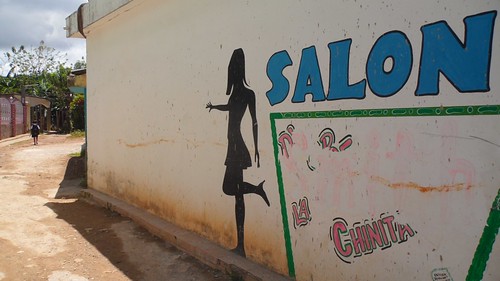
el salon, pa' lla!

my hotel is right on the beach & run by this french lady and a bunch of haitians at night. they are incredibly friendly. it's fun to practice french and then be able to switch to spanish when i don't know what the fuck i'm saying in français. i even met a haitian guy who took me to get some weed, and i waited in this little hut with 8 other haitians and a dominican girl who wanted to dance with everyone. they were just chugging rum & energy drinks, totally a great atmosphere. the beaches are just as beautiful as in the south, and i don't even feel like the water is colder up here like i had heard. i have had a few good meals of rice, beans, salad & pork for really cheap, like RD$190 with a coke (US$5). i have noticed that saying "buenas", "qué pasa?" or "cómo te va?" is well-respected and appreciated by the dominicans/haitians who think i'm just a white guy who is here to shit on their island while on vacation... maybe it just puts me at ease to hear them respond back, but still...

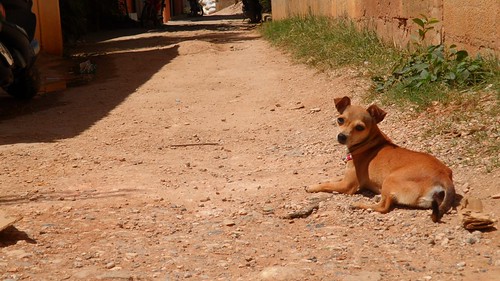
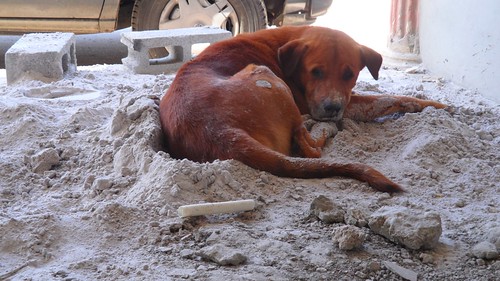
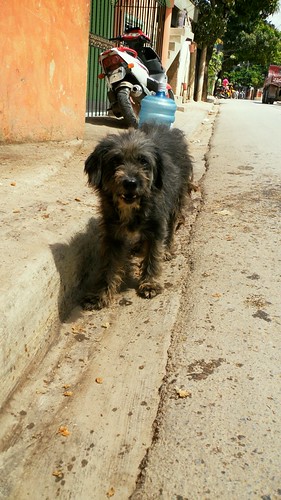
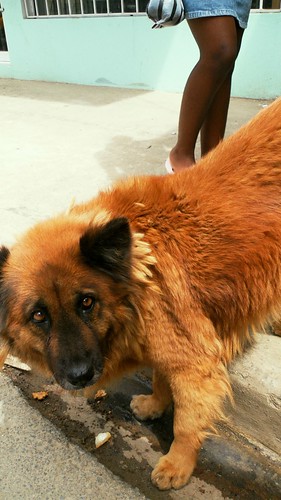
i have basically been tanning, swimming, eating, reading kaleidoscopic grammar and walking the town. there seem to be wayyyy more stray dogs here than in bayahibe,

ankle-bitermusty mutt
wuttup?curled upaww, those big brown eyes :-)

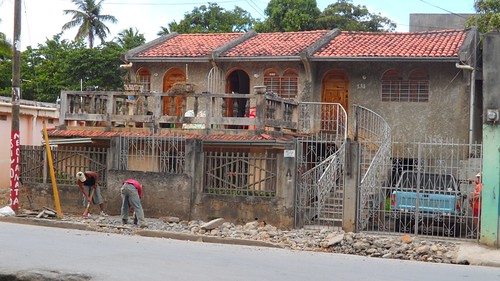
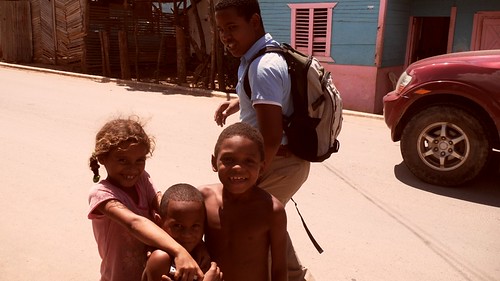
and plenty of motorcycles to go around; i get asked to rent on every hour it seems like. there is a plethora of beautiful art here, i would say more than 10 art stands that are full of colorful paintings done by the locals. today (monday) was much more alive and there were plenty of kids going to/from school, so the pics from that day of the streets are much more representative of how daily life is here, although it was sad to seem some of the homes they walked to...

looks like dirt, even when it was newfoto foto, va a sacal foto!!
just outside of townshantyness
SAM_3715

a few surprises
  • i don't feel like i'm going to be robbed anymore
  • i'm actually starting to adjust to the caribbean dialect of spanish in the DR
  • the dogs aren't grouchy
  • so many frenchies!
  • haitians aren't hated here
well, i'm off to the interior tomorrow, hope to end up in jarabacoa and then on the constanza. there i will also hope to do my interviews for my sociolinguistics class. i will either study the vocalization of their liquids (e.g. algo --> aigo) or there use of infinitives instead of the subjunctive... we'll see what kinds of things the interviewees do!! ok, hasta pronto....